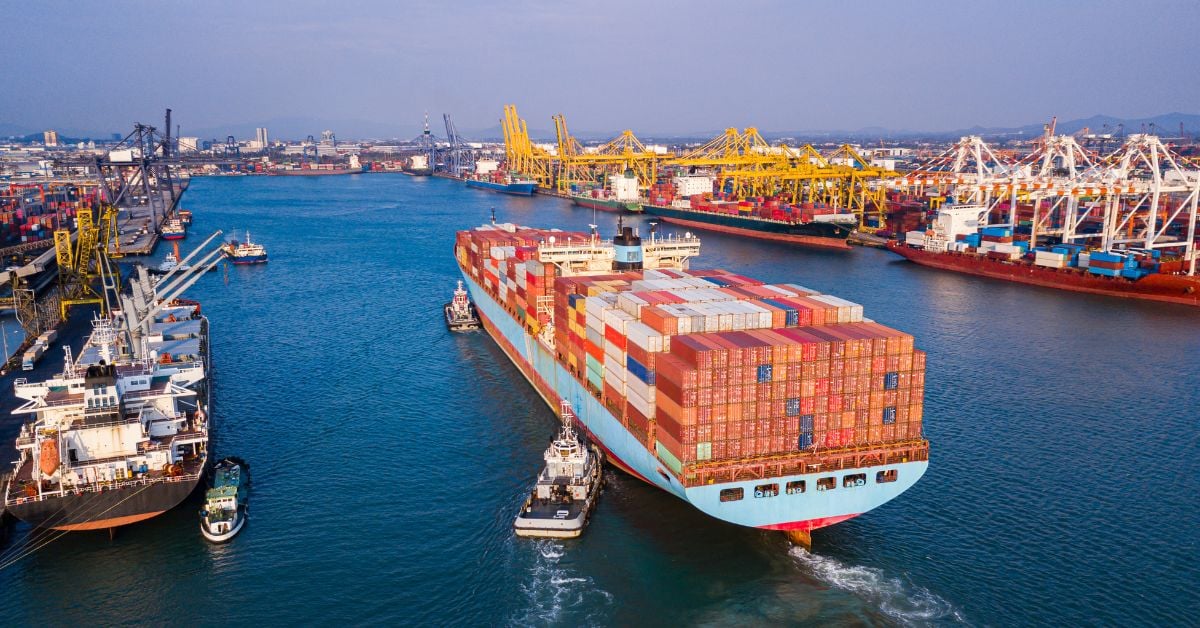
Northern maritime route attracts large Asian ships.
Prolonged instability in the Middle East is prompting Asian shipping companies to test Arctic maritime routes to Europe, although significant hurdles remain for large-scale commercialization.
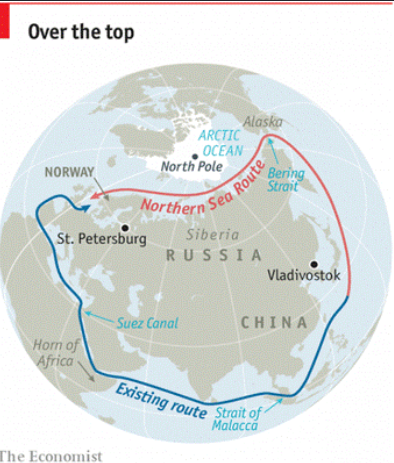
Arctic shipping route (Source: Compiled)
Following China's plans for approximately 10 Arctic voyages this summer, South Korea has also begun trials: the container ship *PanStar Acro* (capacity: 2,700 TEU) recently departed Busan for Rotterdam via Arctic waters, a journey expected to take about 40 days. This trend stems from a desire to avoid the waters off the Horn of Africa and northern Yemen—where Houthi forces are active—without making the long detour around the Cape of Good Hope.
The Arctic route spans less than 15,000 km—significantly shorter than the Suez route (20,000 km) or the Cape of Good Hope route (25,000 km)—but French experts note that this advantage is largely theoretical. Only about 100 vessels traverse this route annually—equivalent to a single day's traffic through the Suez Canal—and it is navigable only from July to October, primarily by smaller vessels.
Key obstacles include:
- Strict technical requirements: crews must hold certifications under the Polar Code, and vessels require ice-strengthened hulls.
- The paradox of drifting ice: increased melting due to climate change generates hard-to-detect ice fragments that pose hazards to ships.
- Escalating costs: higher insurance premiums, fees for transiting Russian waters, and potential costs for icebreaker support.
- Environmental risks: Arctic oil spills are far more difficult to manage, as oil can solidify or adhere to ice in freezing conditions.
Nevertheless, Russia and China continue to pursue a long-term vision for this route—what China calls the "Polar Silk Road." Climate projections indicate that the route's operational window could expand significantly in the future: if global temperatures rise by 3°C by 2100, the route could be navigable for up to eight months a year as early as 2030 (compared to approximately three months currently); Chinese research also forecasts that between 2026 and 2050, the route could be operational from July through December.

Related news

7 Warning Signs That Your Mooring Line Is No Longer Safe to Use

India-Bound LNG Tanker Crosses the Strait of Hormuz